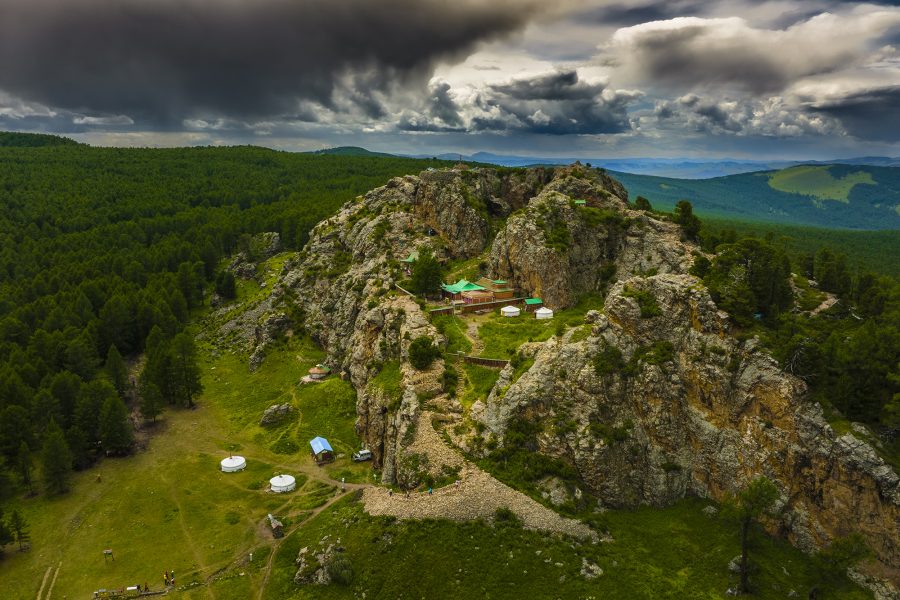
Tuvkhun Monastery is one of Mongolia’s most sacred and peaceful spiritual sites, hidden high in the forested mountains of the Khangai Range within the Orkhon Valley region. Perched on a rocky hilltop in Övörkhangai Province, this remote retreat offers visitors breathtaking views of endless forests, valleys, and distant steppes, creating a truly tranquil and inspiring atmosphere.
The monastery was founded in the 1650s by Undur Gegeen Zanabazar, Mongolia’s first Buddhist leader and a renowned artist and scholar. It served as his personal meditation and retreat center, where he created many of his famous works of art, including early designs of the Soyombo script, which later became a national symbol of Mongolia.
Reaching Tuvkhun is part of the adventure. Visitors usually hike or ride on horseback through pine forests and rocky trails before arriving at the small complex of temples, meditation huts, and sacred sites scattered across the mountaintop. Along the way, travelers encounter ovoos (stone cairns) and spiritual landmarks that reflect the deep religious traditions of the area.
Despite suffering damage during the 20th-century purges, Tuvkhun Monastery has been carefully restored and is now a functioning spiritual site. For travelers seeking a blend of history, culture, nature, and quiet reflection, Tuvkhun Monastery is a must-visit destination that reveals the spiritual heart of central Mongolia.