Azarrad Discover Mongolia

Gandan Monastery – The Spiritual Heart of Mongolia

Introduction

Gandan Monastery (Gandantegchinlen Khiid) is the largest and most important Buddhist monastery in Mongolia and one of the top cultural attractions in Ulaanbaatar. Founded in 1840, it has played a central role in the country’s religious and national history. Once home to thousands of monks, the monastery was a major center of Buddhist learning in Central Asia. During the communist era, when most religious institutions were closed, Gandan remained the only functioning monastery in the country, helping preserve Mongolia’s spiritual traditions. The most striking feature of the monastery is the towering Migjid Janraisig statue, a massive image of Avalokiteshvara, the Bodhisattva of Compassion. Originally built in 1911–1912 to celebrate Mongolia’s independence, the statue was destroyed during the 1930s and later rebuilt with nationwide donations. Today, the 23-meter-high golden figure stands inside a multi-storey temple and can be seen from far away, drawing visitors, pilgrims, and photographers from around the world. Walking through the monastery grounds offers a peaceful escape from the busy streets of the city. Visitors can observe monks chanting in the Great Assembly Hall, spin rows of prayer wheels, and admire colorful murals, prayer flags, and traditional Tibetan-Mongolian architecture. The atmosphere reflects both deep spirituality and living tradition, making the visit feel authentic and meaningful rather than purely touristic. Gandan is also an important center of learning and preservation. Its library houses rare Buddhist manuscripts written in ancient scripts, while the Undur Gegeen Zanabazar Buddhist University continues to train monks and scholars from Mongolia and neighboring regions. This blend of history, education, and daily religious life gives the monastery a unique cultural depth. For travelers interested in history, culture, or spirituality, Gandan Monastery offers a powerful and memorable experience. From its rich past and national symbolism to the quiet rhythm of prayers echoing through its temples, it stands as a must-visit attraction in Ulaanbaatar and a highlight of any journey to Mongolia.

The Janraisig Statue and National Identity

One of Gandan’s most important historical symbols is the Migjid Janraisig statue of Avalokiteshvara, first erected in 1911–1912 to celebrate Mongolia’s declaration of independence from the Qing Dynasty. Standing over 26 meters tall, it became a national icon of compassion, unity, and freedom.

The original statue was dismantled in 1938 and taken to the Soviet Union. After Mongolia’s democratic revolution, a new statue was rebuilt with nationwide donations and officially inaugurated in 1996. Today, the 23-meter-high statue dominates the monastery skyline and serves as a focal point for pilgrims and visitors.

The roots of Gandan trace back to Undur Gegeen Zanabazar (1635–1723), the first spiritual leader of Mongolian Buddhism. In 1639, he was enthroned near Lake Shireet Tsagaan, marking the foundation of Ikh Khuree, the monastic settlement that eventually became Ulaanbaatar.

Tsogchen developed as the central administrative and ceremonial hall, overseeing religious education, monastic discipline, and state rituals. For centuries, it functioned as the heart of Mongolia’s Buddhist hierarchy.

Founded in 1956, the Gandan Library became the largest collection of Buddhist manuscripts in Mongolia, preserving rare sutras and scholarly works that survived the purges of the 1930s. Its collection includes texts in Tibetan, Soyombo, Lancha, Sanskrit, and classical Mongolian scripts.

Since 2007, the library has partnered with UNESCO to digitize and protect fragile manuscripts, ensuring their survival for future generations.

Dashchoiphel College (Founded 1736)

Originally established in Inner Mongolia, the college moved to Ikh Khuree in 1756. It became a major center for Buddhist philosophy and debate, following the classical Tibetan monastic university system. Closed in 1937, it reopened in 1991.

Gungaachoiling College (Founded 1809)

Founded by the Fourth Bogd Jevzundamba, this college specialized in the teachings of Panchen Sonam Drakpa and produced many of Mongolia’s leading Buddhist scholars. Reopened in 1992 after decades of closure.

Yidgaachoizinling College (Founded 1910)

Known for awarding Geshe degrees, the highest academic rank in Buddhist scholarship, this college once hosted assemblies of up to 10,000 monks. It reopened in 1991.

Duinkhor College (Founded 1801)

This college focuses on the Kalachakra (Wheel of Time) teachings, a major tradition in Tibetan Buddhism. In 1995, His Holiness the 14th Dalai Lama gave the Kalachakra Initiation at Gandan, marking a historic moment in modern Mongolian religious life.

Janraisig College (Founded 1912)

Closely linked to the construction of the original Janraisig statue, this college symbolized the connection between Buddhism and Mongolian independence. It was revived in the 1990s along with the monastery’s restoration.

Founded in 1970, this Buddhist university has trained monks and scholars from Mongolia, Russia (Buryatia and Tuva), Inner Mongolia, Kalmykia, and Japan. It continues the academic traditions of the pre-communist monastic colleges and plays a major role in the modern revival of Buddhism in the region.

Established in 1739, Jud College is dedicated to the Tantric (Vajrayana) tradition of Buddhism. It awards the advanced Agramba degree to monks specializing in ritual and esoteric practice. Closed in 1938, it reopened in 1999 and remains an important center for ceremonial Buddhism today.

Gandan Monastery

Khentii, Mongolia

History of Mongol Empire and the great Chinggis Khan

0 (No Review)

Stories, tips, and guides

What to pack

Things you should carry on your Mongolia tour If you planning your next vacation to Mongolia here are a few things that are must-have in your kitty, to make your trip a fulfilling and comfortable experience. Since the weather in Mongolia is highly unpredictable, you need to be prepared. Luggage: It should be travel big […]

Tour Sim Card

If you are traveling to Mongolia for business or as a tourist, you can cut down on your expenses by investing in a local prepaid SIM card. This will save money on your data and reduce roaming charges on calls and texts. You can get a prepaid SIM card package at an affordable price. Expand […]

Power Plug in

Voltage The voltage in Mongolia is 220 V which is the same voltage used in China, Greece, Russia, South Korea, and the United Arab Emirates. 220 V has an advantage over lower voltage such as the 110 V that it is cheaper to transmit. On the other hand, 220 V is more dangerous than lower […]

Mongolia Visa Information

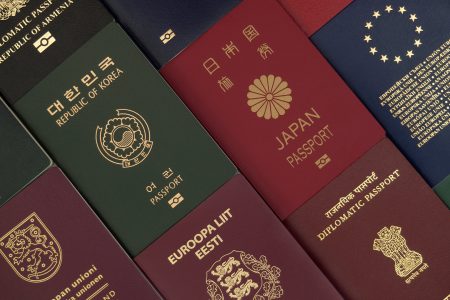
Foreign nationals who wish to visit Mongolia must obtain visas of appropriate types corresponding to the purpose of their visit. Nationals of those countries which have concluded visa exemption agreements with Mongolia are not required to obtain a visa if the intended period of the visit is not beyond the period allowed under such arrangements. […]

The Best Time to Travel to Mongolia

If you are planning to travel to Mongolia, the most significant thing to consider is the weather. The country experiences an extreme continental climate; it is so far inland that no sea tempers its climate. Mongolia has four seasons and each has its own character. Keep in mind that the country has an average of […]

About Ger

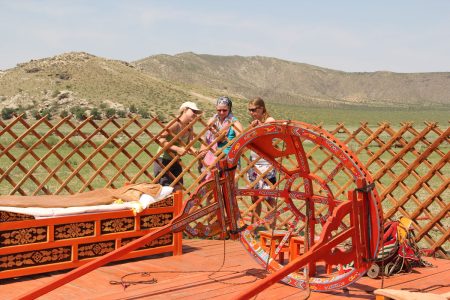
GER The ger is suited ideally to the country’s extreme continental climate and the nomadic life of its people. This multi-purpose dwelling is easily collapsed, transported, and put up again. The ger was developed by nomads in ancient times and has been used to the present day. A growing recent trend is shifting the movable […]

About Ulaanbaatar

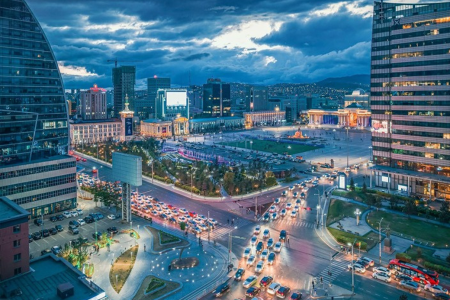
Ulaanbaatar, the capital of Mongolia resides on the banks of river Tuul. It was founded in 1639 as the center of Buddhism and has since grown to reflect a mix of ancient traditions, Buddhist rituals, and modern commerce and trade. It is the undisputed political, economic, and cultural hub of Mongolia. The capital is administrated […]

Culture & History

MONGOLIAMongolia lies in the northern part of the Central Asian plateau on the 87° 44’ meridian between 119° 56’ eastern longitude and 52° 09’ and 41° 35’ northern latitudes. The distance between the country’s westernmost and easternmost points is 2.392 km (1.486.6 miles), and 1.259 km (782.5 miles) between its northernmost and southernmost points. Total […]